Manjushri Bodhisattva Mini Thangka — Artwork Core Only · XTK-132 — XTK-132:f68e40ab2614420d9f3ba7f8e90d0f28623eb8fd82fe1a07bee06aee47f8fb5d
The piece

Thangka Painting · Cotton canvas

Manjushri Bodhisattva Mini Thangka — Artwork Core Only · XTK-132

Catalogue preview · Not available for purchase

Manjushri Bodhisattva · 4.0 × 5.0 cm · xtk-132

The piece

Size 4.0 × 5.0 cm
MaterialCotton canvas
Artist / workshopCairang Dongzhi
OriginRegong / Tongren County, Huangnan Prefecture
Figure Manjushri Bodhisattva
Referencextk-132
One of oneYes

The work

Artwork core only. Any frame or case shown in the photograph is for presentation and is not included.

Small-format work; keep away from humidity; keep away from water

About this work

Note: Manjushri is a common bodhisattva theme in Buddhist art; body color, face, mudras, implements, posture, crown, seat and background details may differ across lineages and thangka works. The following focuses on thangka art, cultural meaning and gift blessings, and makes no claims of religious efficacy.

Key Selling Points

Manjushri theme, carrying clear thinking, discernment and steady practice

Manjushri's artistic image often brings to mind valuing knowledge, seeking the truth and keeping independent thought when facing complex things. As a small cultural artwork, it suits good wishes for progress in learning, clear thinking, composed judgment and continual growth.

A sword raised high, conveying decisiveness, clarity and upward strength

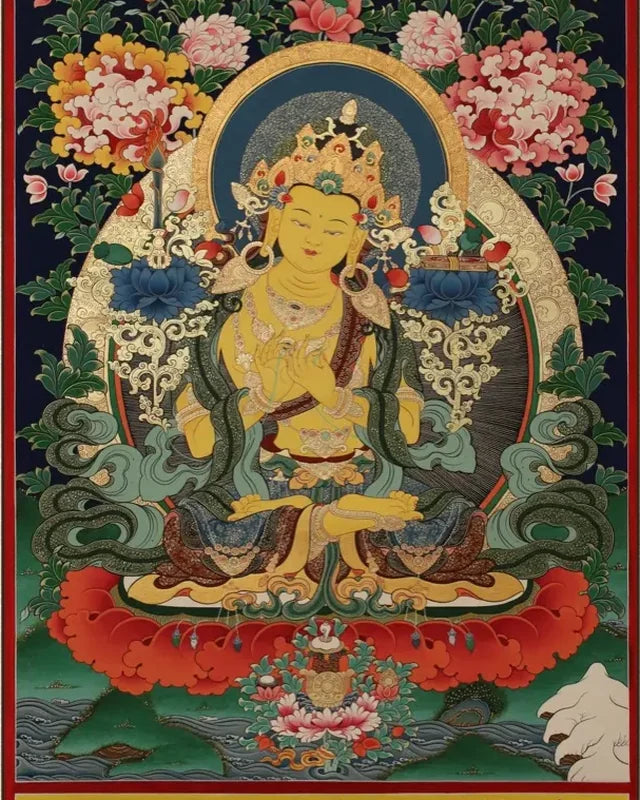
The figure's right hand raises a sword high, its upright blade becoming the vivid focus of the picture. The sword adds clarity, decisiveness and breakthrough to the work, echoing the figure's peaceful face in a combination of firmness and gentleness, making the whole image both dignified and full of spiritual strength.

Abundant details in the crown, necklaces, halo and lotus seat, rewarding traditional patterns

From the crown on the head, earrings, necklaces and garment ornament to the round halo, scrolling clouds, landscape, multi-layered lotus petals and sword details, the picture extends in order from the center outward. The linework is fine and the colors vivid, suited to close appreciation of the fine beauty of Regong thangka composition, color and decorative patterns.

Cultural Meaning

When doubts and problems arise in life, there is no need to rush to an answer. Read a little more, ask a little more, and leave a little more time to sort things out. Learning a subject, finishing a task, understanding a person or a matter all take patience and focus; when we are willing to stay curious and admit what we still have to learn, a more assured strength gradually grows in the heart.

The blessing this mini thangka conveys is the wish that you always keep a passion for learning and the courage to think independently; may you not lose clarity amid busyness, slowly see the direction amid confusion, and walk toward a brighter, fuller and freer life with gentle yet firm steps.

May the lamp of your heart always shine and your learning bear fruit;

may your thinking be clear and your judgment composed;

may you study diligently and think well, and the road ahead gradually open.

Suitable For

People studying, preparing for exams or delving into their field

Carrying wishes for focused learning, clear thinking and steady progress; may they keep patience through the long learning process, not be shaken by momentary problems, and gradually see growth and rewards through earnest accumulation.

Family and friends graduating, going on to further study, starting a job or a new plan

Expressing warm encouragement to explore bravely, think diligently and move forward firmly. In the new stage, may they keep curiosity and judgment, and find their own rhythm and direction through continual learning and trying.

Friends who love reading, reflection and cultural art

With a picture of sword, lotus, clouds and a warm gold halo, expressing good wishes for a clear mind, growing knowledge and a composed life, suited as a gift for graduation, birthdays, starting a job or holidays.

Collectors who love the Manjushri theme and Regong thangka painting

Yourself

Display it in your study, on your workbench, in a reading corner or personal collection space as a reminder not to rush to resolve every doubt; keep reading, keep thinking, finish the small things in front of you carefully, and let clarity and knowledge slowly accumulate over time.

Display and Care Suggestions

Keep the environment dry and clean, away from damp, dust and high heat or direct sun.

Display, store and enjoy it in a tidy, respectful way to keep the work complete and beautiful.

Size 4.0 × 5.0 cm
Included accessoriesNone
FramingUnmounted — artwork core only; frame/case not included
MaterialCotton canvas
Artist / workshopCairang Dongzhi
Art traditionRegong school
OriginRegong / Tongren County, Huangnan Prefecture
Figure Manjushri Bodhisattva
Referencextk-132
One of oneYes

A note on what this is

We present these objects as works of art and describe their subjects and craftsmanship. We make no claim that ownership will change your circumstances.

General craft background

Notes on Color Thangka Craftsmanship

Color thangka uses natural mineral coloring as its core visual language. On a smooth, finely prepared cotton ground, the painter sketches and outlines the figures according to iconographic rules, then applies color layer by layer using mineral pigments such as cinnabar, realgar, malachite green, azurite blue, conch-shell white, red ochre and yellow ochre, together with small amounts of plant-based color.

During painting, the pigments are ground, settled and mixed with binder, then blended with animal glue and applied in thin washes. Through repeated glazing from light to dark, the painter renders the texture of the deity's body, the folds of garments, lotus patterns, rocks and clouds, and background ornament, so the colors are full and vivid while keeping fine, translucent layers.

Mineral pigments commonly used in color thangka include:

  • Cinnabar: for robes, lotuses, flame patterns and red ornament
  • Realgar: for the warm yellow of the deity's body, crowns and local patterns
  • Malachite / mineral green: for lotus leaves, landscapes, garments and blue-green ornament
  • Lapis lazuli / azurite blue: for the sky, background, garment folds and blue details
  • Conch-shell white: for highlighting the body, cloud patterns, pearls and facial details
  • Red ochre, yellow ochre: for rocks, ground, skin-tone transitions and warm layers
  • Carbon black: for outlines, hair, shadows and contour details

After the main coloring is done, the painter outlines contours, garment folds and patterns with a fine brush, and uses gold leaf, gold powder or mud gold in places such as the halo, crown, ritual implements, garment edges and important motifs to paint details, adding dignity and opulent layers to the work.

Traditional materials palette (general reference)

This palette is general background and does not confirm that every listed material is present in this individual work.

Canvas: cotton; pigments: gold leaf, silver leaf, gold powder, silver powder, mud gold, mud silver, coarse gold, fine gold, deep gold, light gold, red gold, blue gold, 98 gold, 74 gold, cinnabar, vermilion, realgar, orpiment, red ochre, yellow ochre, stone yellow, malachite green (malachite), azurite blue (azurite), lapis lazuli, ultramarine, stone purple, amethyst powder, lime white, lead white, conch-shell white, mica powder, carbon black, pine-soot ink, mineral carbon black, indigo, earth green, mineral red, mineral brown.

General condition and aftercare guidance

Condition, Imperfections and Free Replacement Policy

Subtle differences in brushwork, the natural graininess of mineral pigments, changes in the luster of the gold under different lighting, and the slight texture of the canvas and mounting materials are all normal features of a traditional hand-painted thangka, not quality problems.

Because every thangka is hand-painted, no two works are exactly alike. Slight color differences or variations in local brushwork or pattern details caused by photographic lighting, screen display and the properties of natural materials are within the normal range.

If the work you receive has any of the following, we will replace it with a new one free of charge:

Obvious creases, damage or stains on the painting;

Damage to the canvas, paint layer or mounting that affects the overall display;

Obvious and substantial differences in color, material or craftsmanship between the item and the displayed sample;

The main image, size or core craftsmanship seriously does not match the order.

We carefully inspect every work before shipping and only send it once we have confirmed that the painting, materials, mounting and packaging are in good condition, doing our best to ensure the work you receive is complete, beautiful, and meets display and collecting standards.

Ask about this piece

Manjushri Bodhisattva Mini Thangka — Artwork Core Only · XTK-132