Craft
The Regong method
Regong is a valley in Qinghai where thangka painting has been the ordinary trade of ordinary households for roughly six hundred years. It is listed by UNESCO as intangible cultural heritage. This is what actually happens between raw cotton and a finished painting.
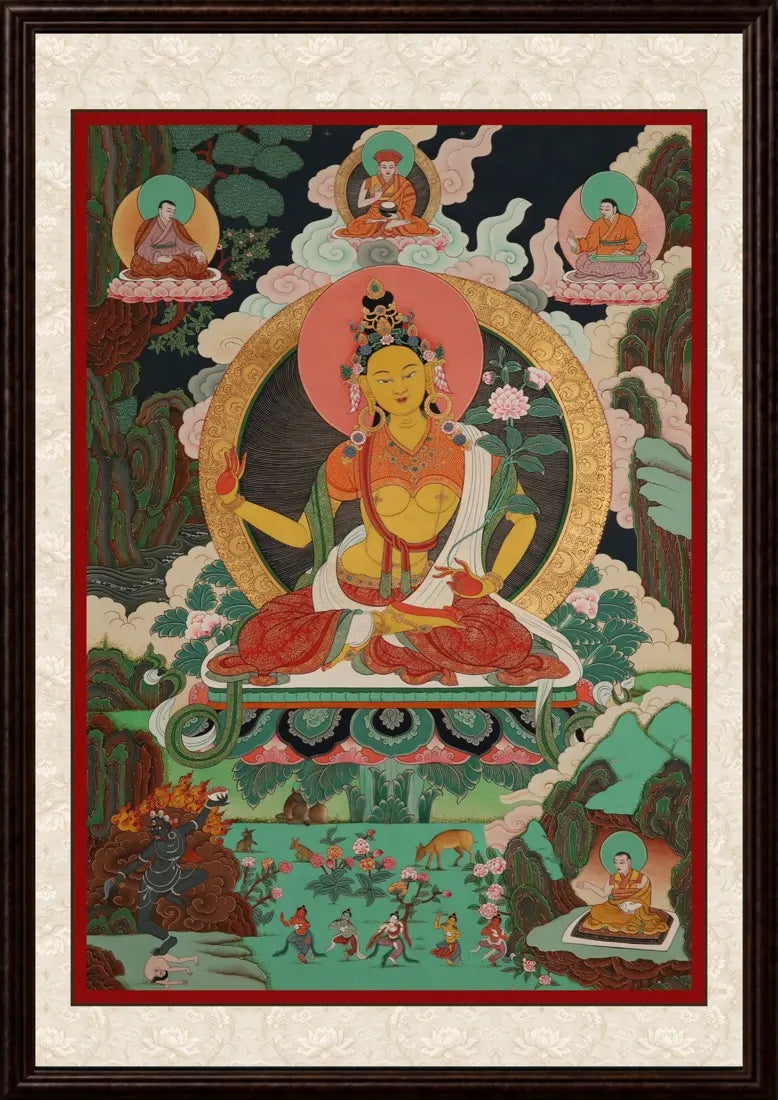
One · the cloth
Nothing is painted on raw cloth.
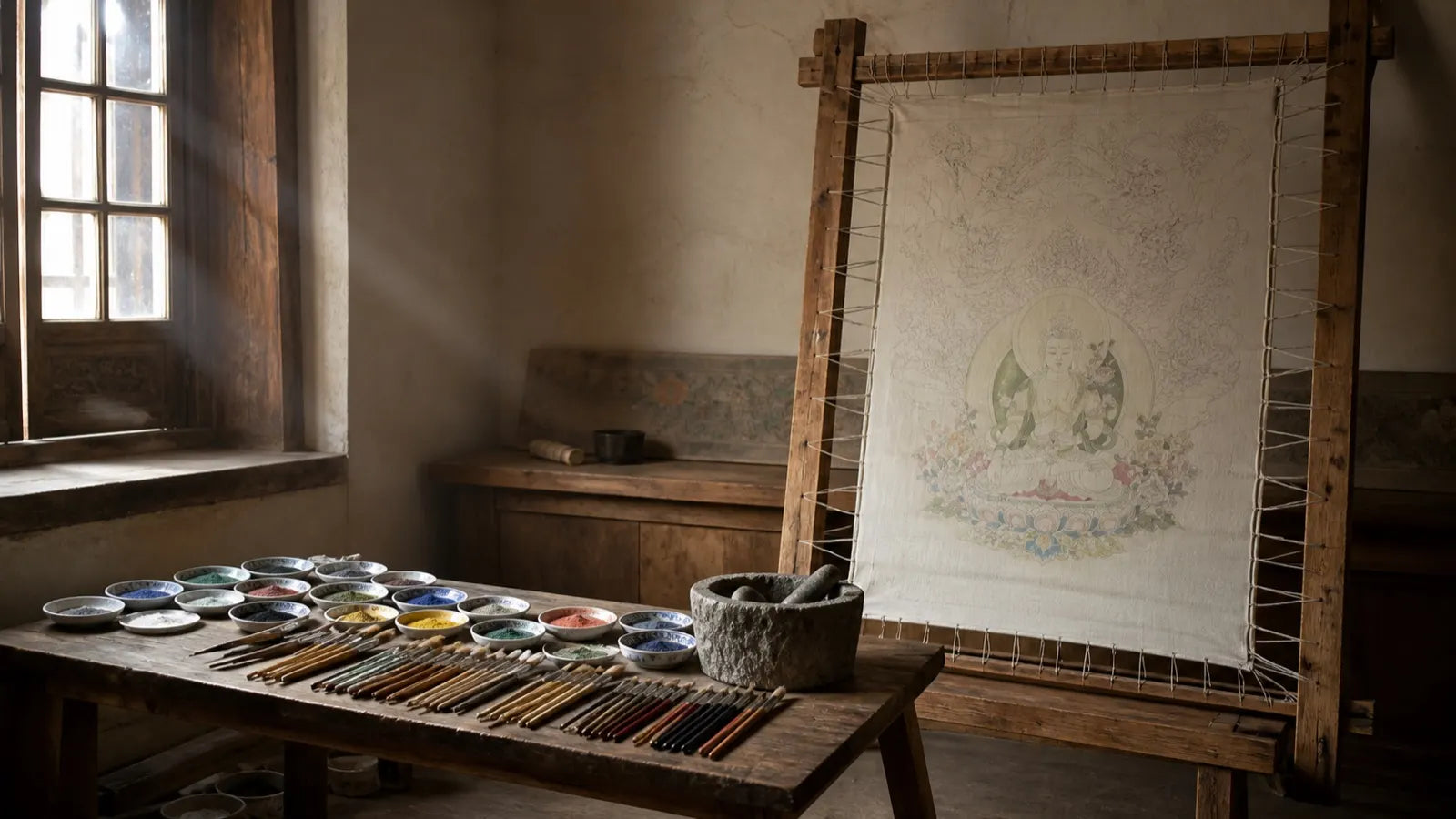
Cotton is stretched on a wooden frame and sized with a mix of chalk and hide glue, then burnished with a smooth stone until the weave closes and the surface will take a line cleanly. A badly prepared ground shows up years later as cracking, so this stage is not hurried.
Two · the measure
A thangka begins as a grid, not a drawing.
The painter snaps a central axis onto the primed cloth, then a set of horizontal bands, and measures the whole figure against them in sor — a unit taken from the width of the painter’s own finger, scaled to the size of the piece. The face, the span of the shoulders, the distance from knee to knee: all of it is fixed before a brush is loaded.
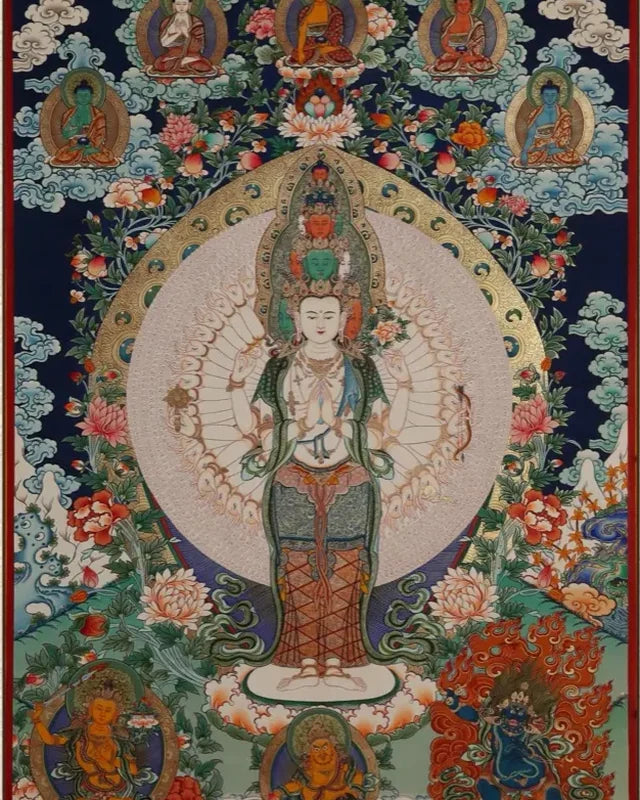
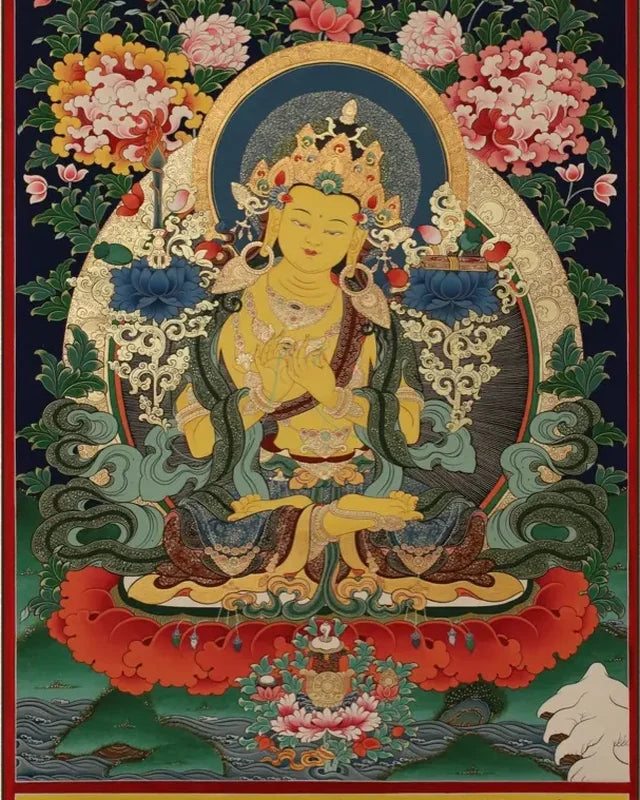
This is why two paintings of the same figure made two hundred years apart still agree with one another. The painter’s hand shows in the line, the shading and the gold. It does not show in the proportions, and it is not supposed to.
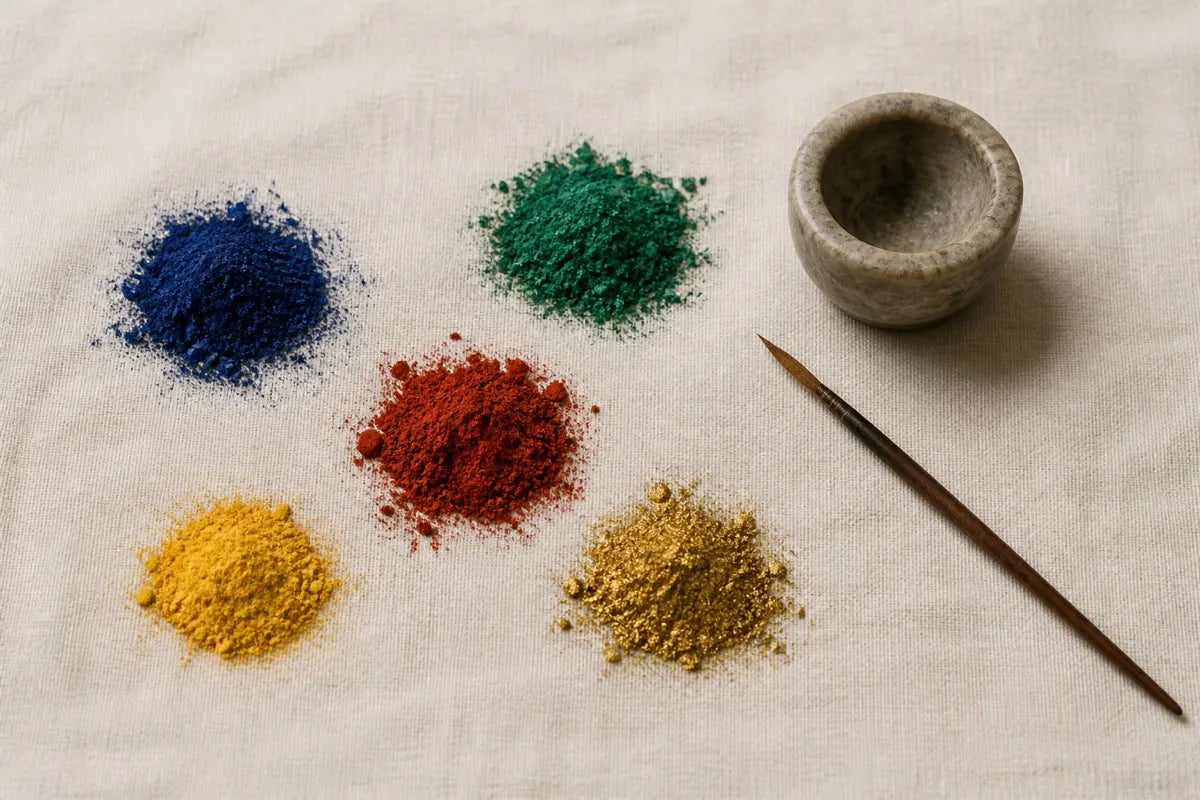
Three · the colour
Every colour was ground from stone or earth.
Colour goes on flat, from the background forward, and shading is built in thin passes. There is no colour anywhere on this website except the five below and the paintings themselves.
- Azurite石青Copper carbonate. Ground coarse for depth, fine for the sky.
- Malachite石绿From the same ore body as azurite. Landscape and lotus leaf.
- Cinnabar朱砂Mercury sulphide. Robes, flame, the seal on the reverse.
- Orpiment雌黄Arsenic sulphide. The body colour of a wealth deity.
- Gold泥金24k, as leaf and as liquid gold. Burnished with agate, applied last.
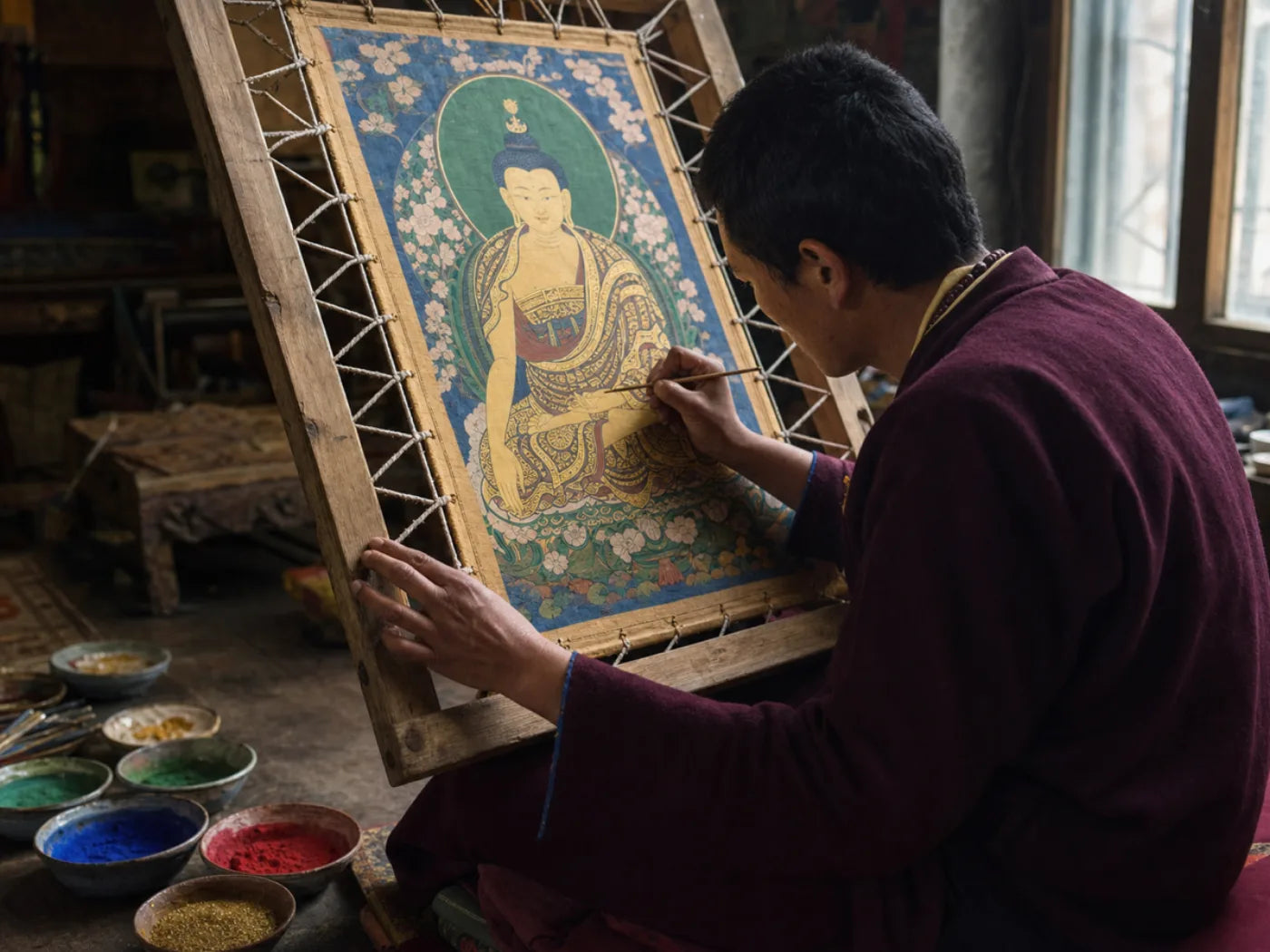
Four · the gold
Gold is last, and it is the slowest part.
Leaf for the ornaments and jewellery, liquid gold drawn with a fine brush for the line work, then burnished with an agate tip so it catches light at an angle rather than sitting flat. A large painting can take three months, most of it here.
every painting is signed on the reverse
and registered against the painter who made it