Amitabha Buddha Mini Thangka — Artwork Core Only · XTK-102 — XTK-102:236fe43501ce110e89e7c4a17d2be36edb696ffd697be2ccaaddd6119f2d4c9f
The piece

Thangka Painting · Cotton canvas

Amitabha Buddha Mini Thangka — Artwork Core Only · XTK-102

Catalogue preview · Not available for purchase

Amitabha Buddha · 4.0 × 5.0 cm · xtk-102

The piece

Size 4.0 × 5.0 cm
MaterialCotton canvas
Artist / workshopJixian
OriginRegong / Tongren County, Huangnan Prefecture
Figure Amitabha Buddha
Referencextk-102
One of oneYes

The work

Artwork core only. Any frame or case shown in the photograph is for presentation and is not included.

About this work

Note: Amitabha is a common Buddha theme in Buddhist art; body color, face, mudras, implements, posture, garments and background details may differ across lineages and thangka works. The following focuses on thangka art, cultural meaning and gift blessings, and makes no claims of religious efficacy.

Key Selling Points

Amitabha theme, carrying peace, light and warm wishes

Amitabha's artistic image often brings to mind compassion, peace, light and pure calm, fitting for the good intention that family, friends and oneself be safe, have smooth days and a bright mind.

Meditation mudra with an alms bowl, a calm and harmonious character

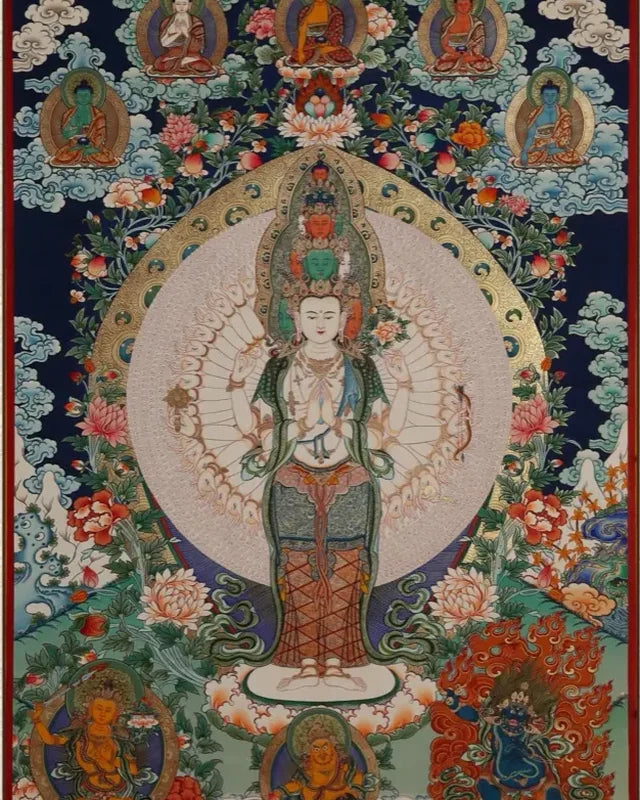
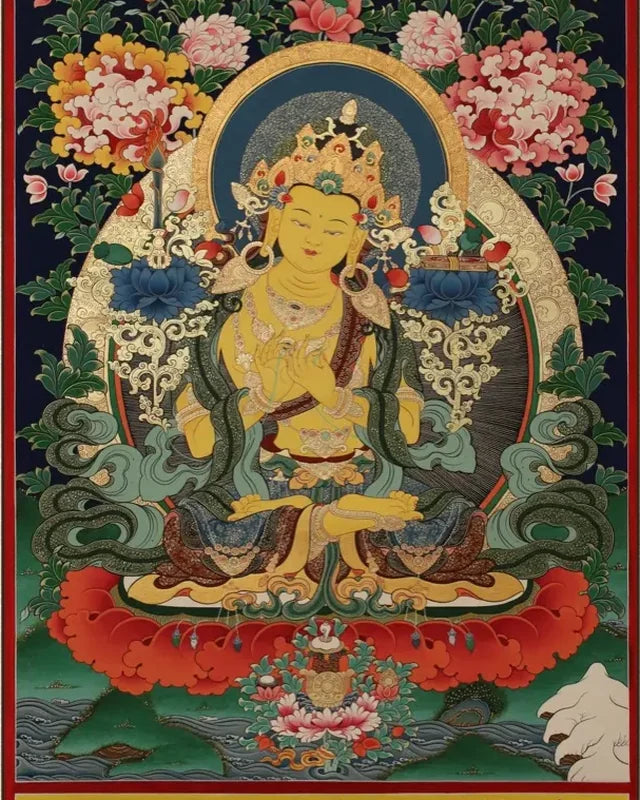
The figure sits on a lotus with hands in the meditation mudra holding an alms bowl, a stable, upright composition; amid the ornate colors and patterns, it keeps a tranquil strength of resting in the present and calm self-possession.

Golden yellow and vermilion against azure and emerald, bright splendor worth close viewing

The warm gold body, vermilion garment folds, emerald hems and azure background set each other off; the warm-cool contrast is vivid yet harmonious, making the figure more dignified and giving the small picture rich, full visual layers.

Lotus seat, halo, flowers, leaves and clouds unfolding in layers, rich traditional ornament

From the curls, garment folds and bowl to the lotus petals, round halo, blooming lotuses, flowers, leaves, clouds, rocks and waves, the details are intricate yet orderly, suited to close appreciation of the subtle beauty of thangka painting.

A tiny picture with both dignified calm and bright vitality

The figure's settled posture balances the lotuses on both sides, the flowers and leaves above and the intricate painted patterns; it has a peaceful character suited to quiet viewing as well as an unforgettable vivid splendor.

Cultural Meaning

Amitabha's artistic image can often be understood as a visual expression of compassion, light and inner peace. The figure sits upright on a lotus seat, his hands forming a mudra and holding an alms bowl, his expression peaceful and settled, as if reminding us: however busy daily life is and however the outside world changes, you can keep a quiet space for yourself and let your thoughts slowly return to clarity and composure.

Lotuses blooming amid the waves are often seen as artistic images of purity, resilience and beauty. The gold-red halo with its blossoms and clouds adds warm, bright color to this quiet. True calm is not the absence of worries and fluctuations, but still being willing, through life's ups and downs, to keep goodwill, patience and a feeling for beautiful things.

The blessing this mini thangka conveys is the wish that in life, work and dealings with others one has a gentle yet firm inner strength; may you not lose direction when busy nor feel empty when alone, and slowly cultivate a calm, bright and generous mind in every ordinary day.

May your mind be clear and the years calm and at ease;

may lotuses always bloom and your steps be gentle and assured;

may light accompany you and your days be composed and abundant.

Suitable For

Family and friends hoping for a safe, harmonious life

Carrying good wishes for peace, warmth and smooth days; may they feel a steady, gentle inner strength even in ordinary days.

Friends going through pressure or a turning point in life

Expressing gentle, unhurried, non-judging care; may they slowly find a rhythm and calm that suit them amid complex affairs and emotional fluctuations.

Elders or family members who value traditional culture

Collectors who love the Amitabha theme and thangka painting

Yourself

Display it in your study, tea room, reading corner, on your workbench or in a personal collection space, adding a warm, calm visual companion to daily life and reminding you to keep inner brightness and peace in the gaps between busyness.

Display and Care Suggestions

Keep the environment dry and clean, away from damp.

Keep it away from grease, perfume, cleaners and other chemicals.

Display, store and enjoy it in a tidy, respectful way.

Size 4.0 × 5.0 cm
Included accessoriesNone
FramingUnmounted — artwork core only; frame/case not included
MaterialCotton canvas
Artist / workshopJixian
Art traditionRegong school
OriginRegong / Tongren County, Huangnan Prefecture
Figure Amitabha Buddha
Referencextk-102
One of oneYes

A note on what this is

We present these objects as works of art and describe their subjects and craftsmanship. We make no claim that ownership will change your circumstances.

General craft background

Notes on Color Thangka Craftsmanship

Color thangka uses natural mineral coloring as its core visual language. On a smooth, finely prepared cotton ground, the painter sketches and outlines the figures according to iconographic rules, then applies color layer by layer using mineral pigments such as cinnabar, realgar, malachite green, azurite blue, conch-shell white, red ochre and yellow ochre, together with small amounts of plant-based color.

During painting, the pigments are ground, settled and mixed with binder, then blended with animal glue and applied in thin washes. Through repeated glazing from light to dark, the painter renders the texture of the deity's body, the folds of garments, lotus patterns, rocks and clouds, and background ornament, so the colors are full and vivid while keeping fine, translucent layers.

Mineral pigments commonly used in color thangka include:

  • Cinnabar: for robes, lotuses, flame patterns and red ornament
  • Realgar: for the warm yellow of the deity's body, crowns and local patterns
  • Malachite / mineral green: for lotus leaves, landscapes, garments and blue-green ornament
  • Lapis lazuli / azurite blue: for the sky, background, garment folds and blue details
  • Conch-shell white: for highlighting the body, cloud patterns, pearls and facial details
  • Red ochre, yellow ochre: for rocks, ground, skin-tone transitions and warm layers
  • Carbon black: for outlines, hair, shadows and contour details

After the main coloring is done, the painter outlines contours, garment folds and patterns with a fine brush, and uses gold leaf, gold powder or mud gold in places such as the halo, crown, ritual implements, garment edges and important motifs to paint details, adding dignity and opulent layers to the work.

Traditional materials palette (general reference)

This palette is general background and does not confirm that every listed material is present in this individual work.

Canvas: cotton; pigments: gold leaf, silver leaf, gold powder, silver powder, mud gold, mud silver, coarse gold, fine gold, deep gold, light gold, red gold, blue gold, 98 gold, 74 gold, cinnabar, vermilion, realgar, orpiment, red ochre, yellow ochre, stone yellow, malachite green (malachite), azurite blue (azurite), lapis lazuli, ultramarine, stone purple, amethyst powder, lime white, lead white, conch-shell white, mica powder, carbon black, pine-soot ink, mineral carbon black, indigo, earth green, mineral red, mineral brown.

General condition and aftercare guidance

Condition, Imperfections and Free Replacement Policy

Subtle differences in brushwork, the natural graininess of mineral pigments, changes in the luster of the gold under different lighting, and the slight texture of the canvas and mounting materials are all normal features of a traditional hand-painted thangka, not quality problems.

Because every thangka is hand-painted, no two works are exactly alike. Slight color differences or variations in local brushwork or pattern details caused by photographic lighting, screen display and the properties of natural materials are within the normal range.

If the work you receive has any of the following, we will replace it with a new one free of charge:

Obvious creases, damage or stains on the painting;

Damage to the canvas, paint layer or mounting that affects the overall display;

Obvious and substantial differences in color, material or craftsmanship between the item and the displayed sample;

The main image, size or core craftsmanship seriously does not match the order.

We carefully inspect every work before shipping and only send it once we have confirmed that the painting, materials, mounting and packaging are in good condition, doing our best to ensure the work you receive is complete, beautiful, and meets display and collecting standards.

Ask about this piece

Amitabha Buddha Mini Thangka — Artwork Core Only · XTK-102