
About this work
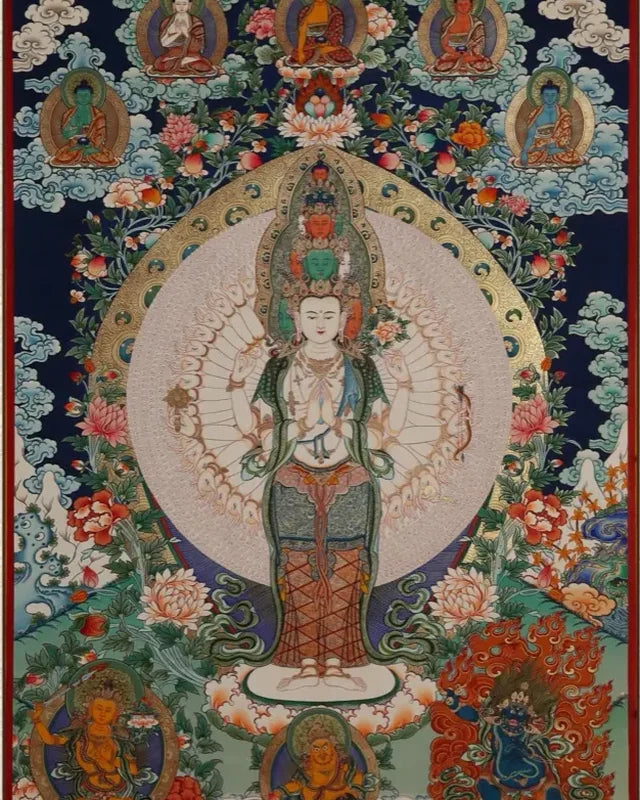
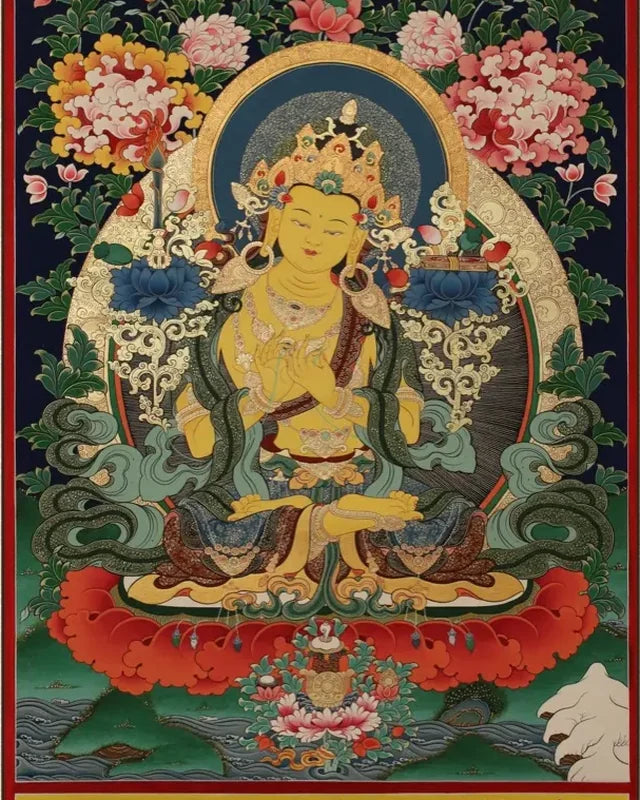
In the painting, Amitabha has a peaceful expression, with a round head halo clearly visible behind him; his right hand hangs naturally and his left holds a lotus before his chest, the garment folds layered and flowing. The red flowering branches, cloud patterns and gold background interweave, adding abundant vitality to the dignity of the picture. The lotus seat symbolizes purity and self-possession, while the blossoms and clouds add a gentle, settled and complete visual mood.
Note: Amitabha is an important Buddha in Buddhist art, often linked with the cultural meanings of compassion, light and peace. Mudras, implements, garments and background details may differ across lineages and thangka works. The following focuses on thangka art, cultural meaning and gift blessings, and makes no claims of religious efficacy.
Key Selling Points
Amitabha theme, conveying tranquility and calm
Amitabha's image is often understood as compassion, stability and light, fitting for wishes of safety, smooth progress and inner composure.
Red robe and golden body, warm and dignified colors
The vermilion robe and gold background form a vivid yet harmonious contrast, giving the picture traditional splendor while looking warm and calm.
Lotus seat and blossoms reflecting each other, pure and full of life
The figure stands on a lotus throne amid flourishing branches, symbolizing keeping clarity, gentleness and ease even amid a busy daily life.
Clouds and head halo, clear and bright layers
The round halo and flowing clouds echo each other, setting off the figure's steadiness and making the whole composition more open.
A kind expression, suited to quiet appreciation
The face is serene and the posture steady; looking closely at the lines of the garment folds, lotus petals and leaves, you can feel the delicate charm of traditional painting.
Cultural Meaning
What the Amitabha theme creates first of all is a peaceful, gentle feeling. Rather than relying on strong movement, the picture uses a steady posture, soft colors, blossoms and clouds to present a composed, clear aesthetic.
The lotus grows from muddy water yet stays unstained, and is often given the cultural symbolism of purity, resilience and self-possession. The lotus seat and branches around it seem to remind us that even when daily life is hectic, we can keep a quiet, bright space in our hearts.
This mini thangka is well suited as a small artwork about calm and blessing. Whether placed in everyday living spaces or given to someone important, it carries good wishes for a peaceful life, a cheerful mind and a path gradually coming to completeness.
May your heart be clear and peaceful and your steps steady;
may you open like a lotus, at ease and composed;
may all you meet be good and your years be bright.
Suitable For
Elders and family
Expressing warm blessings of safety, health, smooth progress and peaceful years.
Friends going through busyness or pressure
May they keep a settled mind amid a hectic daily life and slowly regain an unhurried rhythm.
People moving into a new home or setting up a new space
The gold-and-vermilion palette is elegant and warm, suited to adding traditional artistry to a home.
Collectors who love Buddhist culture and thangka art
The figure, flowers, clouds and gold patterns are richly detailed, suited to close viewing and collecting.
Yourself
Keep it in your study, on a tea table or in a personal collection space as an artistic companion reminding you to rest in the present and stay peaceful.
Display and Care Suggestions
Keep the environment dry and clean, away from damp, grease and chemicals such as perfume and cleaners.
Buddhist-art themes are best displayed, stored and enjoyed in a tidy, respectful way.