
About this work
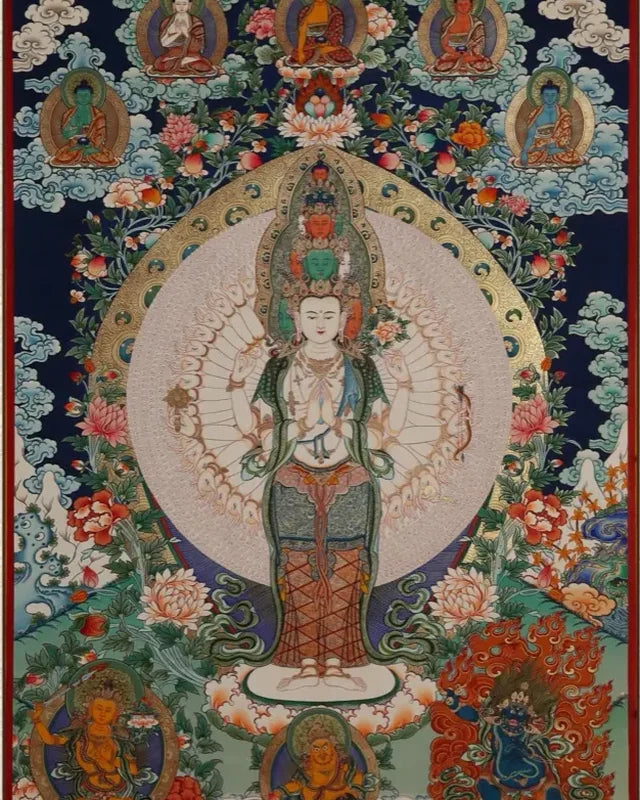
Note: Guru Padmasambhava is a common and important master figure in Tibetan Buddhist art. Crown, implements, posture, garments and background details may differ across lineages and thangka works. The following focuses on thangka art, cultural meaning and gift blessings, and makes no claims of religious efficacy.
Key Selling Points
1. Guru Padmasambhava theme, embodying a calm and wise spirit
Padmasambhava's image can often be understood as an artistic symbol of wisdom, courage and a firm will, fitting for wishes of staying clear-headed and keeping one's footing in the face of change.
2. Black-and-gold thangka art piece, fine and lasting gold-thread patterns
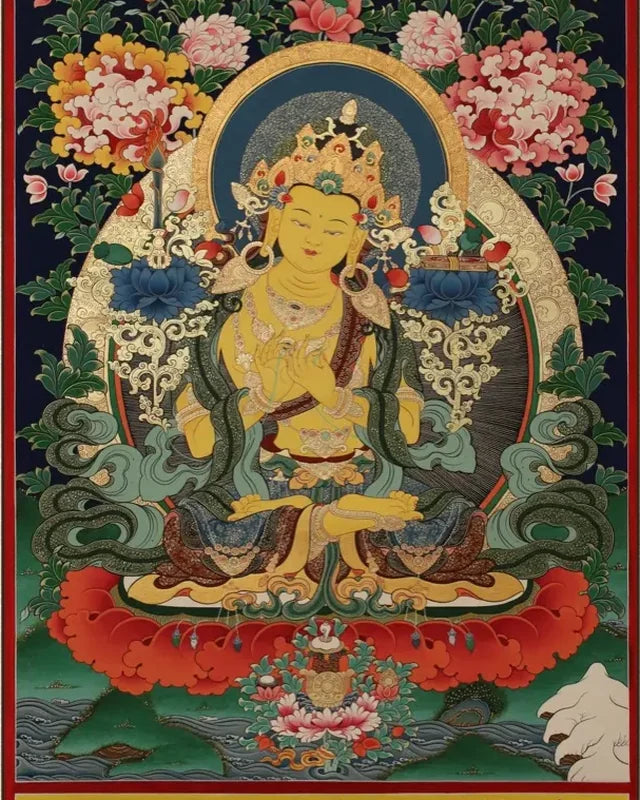
Gold thread spreads in layers along the figure, halo, garments and background patterns, giving a brocade-like fine splendor on the red ground with rich details up close.
3. Rich, ornate red-and-gold palette, warm and dignified to the eye
The vermilion ground and warm gold patterns reflect each other, bright and full in color, adding a steady Eastern aesthetic to a study, tea table or desk.
4. Seated on a lotus, a settled and powerful picture
The figure sits on a throne of layered lotus petals; his dignified, steady posture and flowing garment folds reflect each other, giving the picture both calm and inner tension.
5. Halo and cloud patterns unfolding in layers, rich detail in a tiny space
From the crown, facial lines, ornate robes and necklaces to the round halo, scrolling clouds, flowers and lotus-seat patterns, the composition is full yet orderly, rewarding repeated quiet viewing.
Cultural Meaning
The picture of Padmasambhava seated on a lotus can often be understood as an artistic expression of resting the heart and discerning direction amid complex circumstances. The layered halo and abundant ornament add a bearing of fearing no turmoil and moving forward calmly.
Vermilion and gold lines reflect each other, as if placing fervor and order within the same tiny space. It brings to mind that when facing busyness, pressure and the unknown, true strength is not always an urgent response, but first steadying one's feelings and then handling what is before one with clear judgment.
What this black-and-gold thangka art piece carries is a wish about wisdom, patience and courage: may one not lose composure through life's ups and downs, keep a direction in every choice, and walk toward a broader road through day-by-day accumulation.
May your heart have composure and your thoughts be clear and assured;
may your actions have courage and you meet change with composure;
may your steps be steady and the road ahead gradually open.
Suitable For
1. People in a hard push at work or advancing a project
May they keep focus and judgment amid complex affairs and push steadily toward their goals with a calm mind.
2. Friends facing choices, turning points or changes in life
Expressing a sincere encouragement not to rush for success, but to think clearly and move forward firmly.
3. Family and friends starting a new job, study plan or stage of life
With the settled image of sitting on a lotus, carrying good wishes for being down-to-earth and progressing step by step.
4. Collectors who love black-and-gold craftsmanship, thangka painting and Tibetan aesthetics
The red-and-gold palette, intricate gold-thread patterns and lotus-seat-and-halo composition are vivid, suited to close appreciation and collecting.
5. Yourself
Keep it in your study, on your workbench or in a personal collection space; each time you look at it, a reminder: steady your heart a little, and the direction will grow clearer.
Display and Care Suggestions
Keep it dry and clean, away from damp.
Keep it away from grease and chemicals.
Handle it gently to prevent bending, scratches and knocks to the ornaments.
Display and store it in a tidy, respectful way.