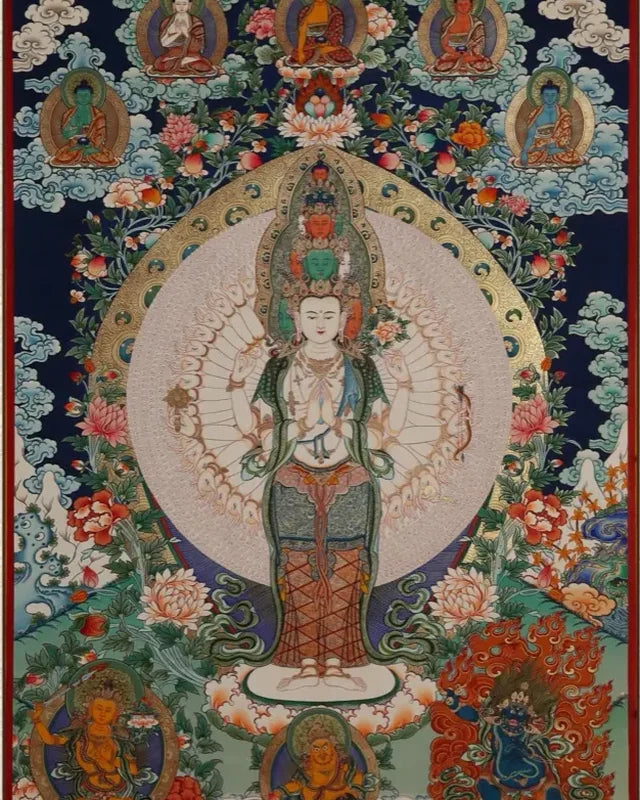
Samantabhadra Bodhisattva Mini Thangka — Artwork Core Only · XTK-070 — XTK-070:bc7a973f108b4110b404a8d16c018ef9315d078ad212478145613f944fb384ba
The piece

Thangka Painting · Cotton canvas

Samantabhadra Bodhisattva Mini Thangka — Artwork Core Only · XTK-070

Catalogue preview · Not available for purchase

Samantabhadra Bodhisattva · 4.0 × 5.0 cm · xtk-070

The piece

Size 4.0 × 5.0 cm
MaterialCotton canvas
Artist / workshopHuajian Dangzhi
OriginRegong / Tongren County, Huangnan Prefecture
Figure Samantabhadra Bodhisattva
Referencextk-070
One of oneYes

The work

Artwork core only. Any frame or case shown in the photograph is for presentation and is not included.

About this work

Key Selling Points

Samantabhadra theme, carrying the intention of moving forward through steady practice

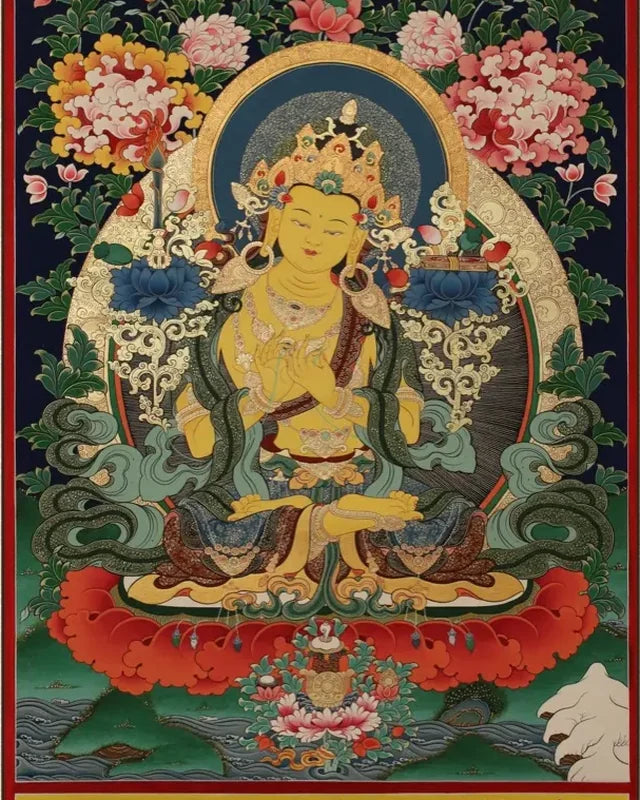
The composition of the figure seated on a white elephant can often be understood as an artistic expression of steadiness, resilience and putting one's heartfelt wishes into everyday action.

A white elephant supporting the lotus seat, a vivid thematic detail

The white elephant's posture is settled, and with the layered lotus seat and seated figure, the picture is more recognizable and has a complete narrative.

Vermilion and gold as the main tones, ornate, dignified and lasting

Warm vermilion sets off the gold patterns, making the subject more eye-catching and presenting a rich, elegant traditional color beauty.

Blue-green garments and pink lotuses, fresh and lively layers

The blue-green garments, pink-white lotuses and red-and-gold background form a delicate contrast, keeping softness within the dignity.

Fine halo, floral and cloud patterns, strong craftsmanship in a tiny space

The crown, necklaces, garment folds and surrounding scrolling foliage are all finely painted, suited to close, quiet appreciation of traditional ornament.

Cultural Meaning

In Buddhist art the Samantabhadra theme often brings to mind aspiration, practice and steady progress. In the picture a white elephant supports the lotus seat and the figure sits calmly; his steady yet gentle posture presents an artistic mood of carrying out one's inner direction in every step.

Many goals cannot be completed all at once; what truly matters is often keeping patience and accumulating bit by bit in daily life. The steadiness of the white elephant, the elegance of the lotus and the full halo reflect one another, as if reminding us not to rush for success, but to walk the road before us earnestly once the direction is clear.

The blessing this mini thangka conveys is the wish that in life and work one holds sincere aspirations and also has the strength to keep practicing; even if the road is long, one can still slowly reach where the heart is headed with a peaceful mind and solid steps.

May you hold good wishes in your heart and all you think be put into practice;

may your steps be steady and your efforts gradually bear fruit;

may you be composed and firm, and the road ahead gentle and open.

Suitable For

People persevering in study, work or long-term goals

Carrying good wishes for being unhurried, continually accumulating and moving steadily forward.

Family and friends starting a new plan or project

May they hold clear goals and slowly open a new chapter through solid action.

Friends going through busyness and pressure

Expressing gentle care; may they steady their rhythm and find inner calm in daily life.

Collectors who love thangka painting, bodhisattva themes and red-and-gold aesthetics

The white elephant, lotus seat, halo and floral patterns make a vivid theme, suited to close, quiet viewing and collecting.

Yourself

Display it in your study, on your workbench or in a personal collection space as a reminder that your heart has a direction and your feet have a road, and to walk every step steadily.

Display and Care Suggestions

Keep the environment dry and clean, away from damp.

Keep it away from grease, perfume, cleaners and other chemicals.

Handle it gently to prevent bending, scratches and knocks to the ornaments.

Display, store and enjoy it in a tidy, respectful way.

Size 4.0 × 5.0 cm
Included accessoriesNone
FramingUnmounted — artwork core only; frame/case not included
MaterialCotton canvas
Artist / workshopHuajian Dangzhi
Art traditionRegong school
OriginRegong / Tongren County, Huangnan Prefecture
Figure Samantabhadra Bodhisattva
Referencextk-070
One of oneYes

A note on what this is

We present these objects as works of art and describe their subjects and craftsmanship. We make no claim that ownership will change your circumstances.

General craft background

Notes on Red Thangka with Color Craftsmanship

Red thangka with color uses a cinnabar-red ground as its core visual language; the overall picture is vibrant and dignified, with strong auspicious and prayerful meaning. After the canvas has been mounted, primed and polished, it is first glazed layer upon layer with cinnabar and other red mineral pigments, giving the background a full, steady and lustrous red tone.

Once the red ground is stable, the painter begins drawing the figures and patterns. The main contours, garment folds, halos, lotuses, auspicious clouds, ritual implements and other details are done mainly in gold powder, mud gold or gold outlining. By alternating deep and light gold, the painter carefully renders the proportions, expressions, ornaments and intricate patterns of the figures, so the gold lines shine more brightly and luxuriously on the red ground and the picture has clear layers and a three-dimensional feel.

The "with color" part uses mineral pigments for local coloring, adding fine and rich color variation while keeping the foundation of "red as the ground, gold as the main element." Common colors include:

Cinnabar: for the background, garment folds, lotuses, flame patterns and red decorative details;

Realgar, yellow ochre, red ochre: for the warm tones of the deity's body, robes, thrones, ritual implements and light-and-shade transitions;

Malachite / mineral green: for head halos, garments, lotus leaves, crowns and local blue-green ornament;

Lapis lazuli / azurite blue: for jewels, garment folds, halos or local blue patterns;

Conch-shell white: for facial features, pearls, highlights on garment folds and local brightening;

Gold powder / mud gold: for outlining, tracing patterns, ornaments, halos and key decorative areas.

After painting is complete, the painter edges and re-traces the details in gold again, and, as the picture requires, burnishes or finely polishes the gold areas so the gold takes on a warm, delicate natural luster. Local colors are built up through many thin washes and fine brushwork, preserving the graininess unique to mineral pigments and the layers of hand painting.

The final result is an artistic effect of "red as the keynote, gold as the framework, color as accent": from afar, the colors are rich, festive and splendid; up close, you can see the fine gold linework, rich pattern structure and delicate mineral colors, giving it both the dignity of a traditional thangka and strong decorative and collectible value.

Traditional materials palette (general reference)

This palette is general background and does not confirm that every listed material is present in this individual work.

Canvas: cotton; pigments: gold leaf, silver leaf, gold powder, silver powder, mud gold, mud silver, coarse gold, fine gold, deep gold, light gold, red gold, blue gold, 98 gold, 74 gold, cinnabar, vermilion, realgar, orpiment, red ochre, yellow ochre, stone yellow, malachite green (malachite), azurite blue (azurite), lapis lazuli, ultramarine, stone purple, amethyst powder, lime white, lead white, conch-shell white, mica powder, carbon black, pine-soot ink, mineral carbon black, indigo, earth green, mineral red, mineral brown.

General condition and aftercare guidance

Condition, Imperfections and Free Replacement Policy

Subtle differences in brushwork, the natural graininess of mineral pigments, changes in the luster of the gold under different lighting, and the slight texture of the canvas and mounting materials are all normal features of a traditional hand-painted thangka, not quality problems.

Because every thangka is hand-painted, no two works are exactly alike. Slight color differences or variations in local brushwork or pattern details caused by photographic lighting, screen display and the properties of natural materials are within the normal range.

If the work you receive has any of the following, we will replace it with a new one free of charge:

Obvious creases, damage or stains on the painting;

Damage to the canvas, paint layer or mounting that affects the overall display;

Obvious and substantial differences in color, material or craftsmanship between the item and the displayed sample;

The main image, size or core craftsmanship seriously does not match the order.

We carefully inspect every work before shipping and only send it once we have confirmed that the painting, materials, mounting and packaging are in good condition, doing our best to ensure the work you receive is complete, beautiful, and meets display and collecting standards.

Ask about this piece

Samantabhadra Bodhisattva Mini Thangka — Artwork Core Only · XTK-070