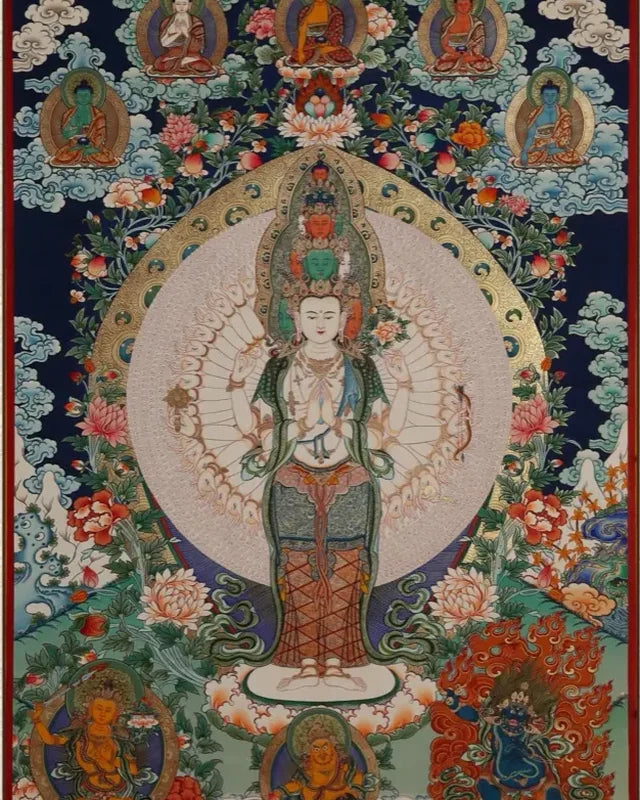
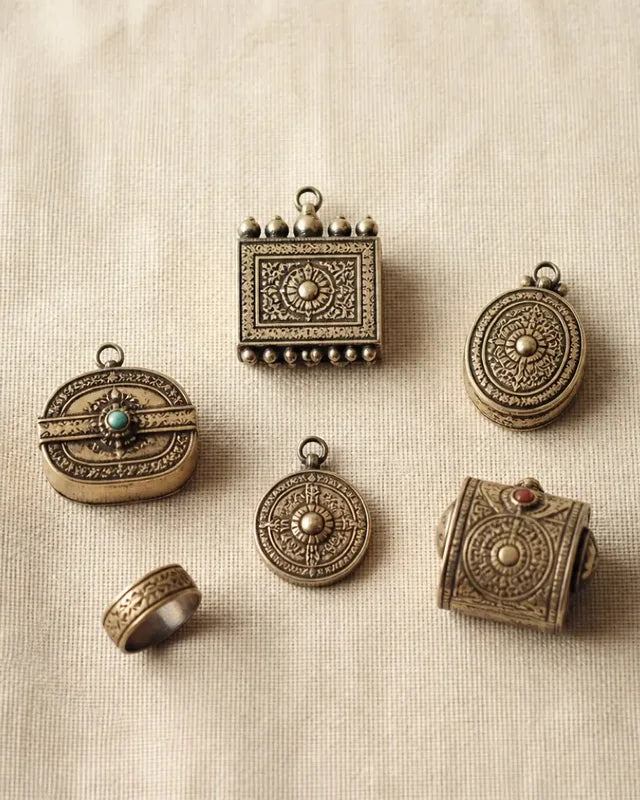

About this work
Key Selling Points
Samantabhadra theme, symbolizing vows and practice
The cultural spirit Samantabhadra represents is often linked with making vows, putting them into practice, persevering and accomplishing good deeds, fitting for wishes of firm aspiration and smooth progress.
Riding an elephant is Samantabhadra's most recognizable iconographic feature. The white elephant can represent steadiness, resilience and the capacity to carry, conveying the strength to fulfill one's original aspiration step by step, undaunted by a long road.
Lotus, halo and auspicious clouds, a fresh and dignified picture
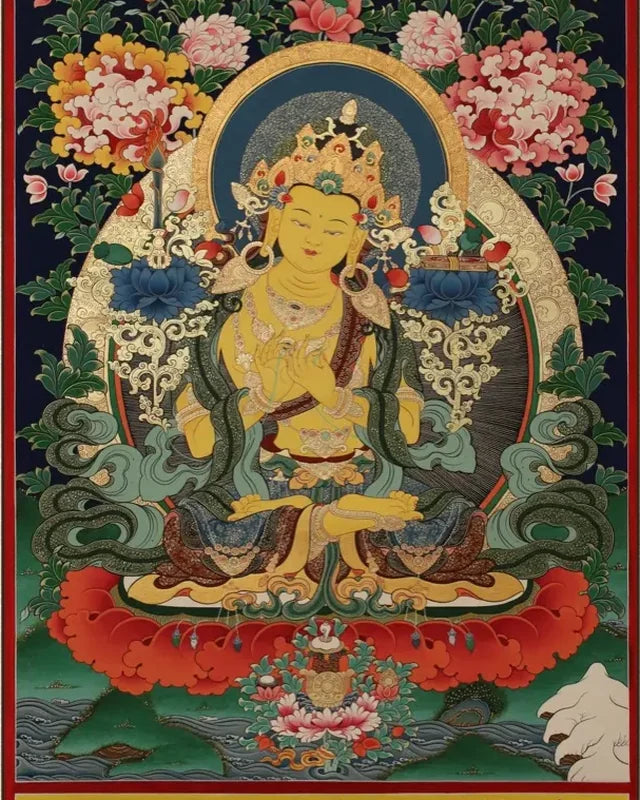
The deity holds a lotus and sits on a lotus seat, with clouds, flowers and leaves unfolding in layers around him, creating a pure, peaceful and lively atmosphere.
Clouds and water reflecting each other, balancing movement and stillness
Below, water patterns roll as the white elephant strides steadily; above, clouds stretch out and the bodhisattva sits calmly, giving the work both a sense of forward motion and a calm, harmonious spirit.
Regong hand-painted mini thangka, rich detail in a tiny space
From the crown jewels, garment folds and necklaces to the elephant's ornaments, lotus petals, clouds and water patterns, everything is rendered with fine linework and rich color, worth viewing up close.
Cultural Meaning
The spirit of "vows and practice" Samantabhadra conveys can be understood as having a beautiful direction in your heart and being willing to carry it out in day-to-day action. Truly important wishes do not stay only in the heart; they gradually become reality through every earnest choice and every steady step.
The white elephant striding steadily in the picture symbolizes perseverance that is neither hasty nor retreating; the bodhisattva seated on it conveys the inner state of staying peaceful in action and holding to your original aspiration amid change. Whether in study, work, business or life's long-term goals, this assurance of "an aspiration in the heart and a road beneath the feet" is needed.
The lotus, clouds and water together form a pure, flowing picture, as if reminding us: the road ahead may not always be smooth, but as long as the aspiration is clear and the steps are steady, strength accumulates over time and you can reach wider places.
The blessing this mini thangka conveys can be summed up as:
May there be an aspiration in your heart and a road beneath your feet;
may your actions have direction and your steps be steady;
may your wishes gradually come true, with merit and wisdom following you.
Suitable For
People working toward a goal
Symbolizing firm aspiration and perseverance; may they reap their own growth and results through long accumulation.
Friends starting a business, going through a transition or advancing a business plan
Expressing a sincere wish for a clear direction, steady action and continual breakthroughs.
People about to travel far, go on to further study or start a new stage
The image of the white elephant moving forward is fitting for wishes of a steady journey, a broad future and smooth progress.
Collectors who love thangka painting, Buddhist culture and traditional art
Samantabhadra riding an elephant is a classic theme, with bright colors and rich cloud-and-water details, suited to quiet admiration and collecting.
Yourself
Keep it in your study, on your workbench or in a personal collection space as a reminder not to forget your original intention and to turn the wishes in your heart into solid action.
Display and Care Suggestions
Keep the environment dry and clean, away from damp, grease and chemicals such as perfume and cleaners.
Buddhist-art themes are best displayed, stored and enjoyed in a tidy, respectful way.