

About this work
Product Overview
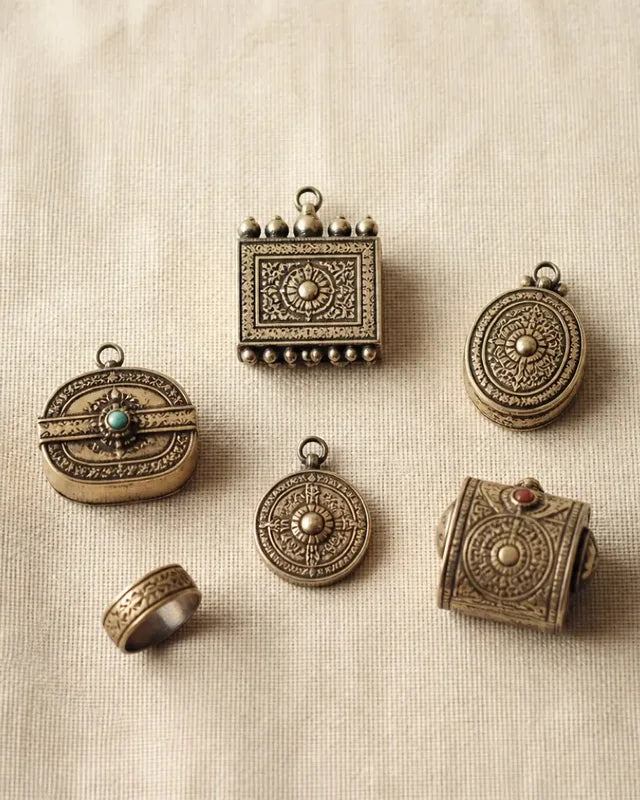
This pendant takes a shrine-style form, with a mainly silver metal frame accented by gilded details, multicolored gems set on both sides of the shrine and a gold lotus base beneath, ornate and dignified. Inside the shrine is a gilded Guru Padmasambhava figure in a settled posture, with a distinctive Tibetan Buddhist artistic character.
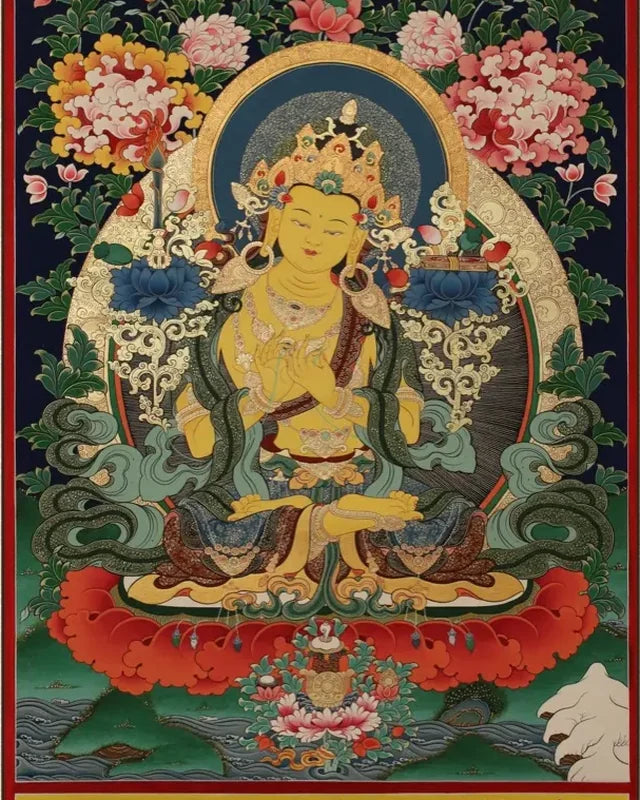
Guru Padmasambhava is honored in Tibetan as "Guru Rinpoche," meaning "Precious Teacher." In Tibetan Buddhist tradition he is regarded as one of the most important masters who brought the Vajrayana teachings to the Land of Snows, and is especially revered by the Nyingma school. His image is often associated with wisdom, protection, removing obstacles, blessings and the lineage of practice.
> Note: Details of Padmasambhava's statues, implements and the interpretation of his form may differ across lineages. This focuses on cultural meaning and artistic expression, and makes no absolute claims of efficacy.
---
Key Selling Points
Guru Padmasambhava theme, highly representative of Tibetan Buddhism
Padmasambhava is one of the most influential figures in Himalayan Buddhist culture, a dignified theme with a deep sense of lineage.
Shrine-style structure, the image of a portable sanctuary
The pendant is like a small shrine holding the figure, symbolizing treasuring, offering and protection at your side.
Gold and silver, beautifully layered
The silver shrine is elegant and steady, while the gilded figure and lotus base are bright and dignified, forming a vivid focal point.
Multicolored gem accents, surrounded by offering light
Colored gems surround the deity like offered jewels, adding opulence and reinforcing an auspicious, complete atmosphere.
Supported by a lotus base, symbolizing purity and awakening
The lotus symbolizes wisdom born from worldly afflictions, echoing the pure imagery of the name "Lotus-Born."
---
Cultural Meaning
Guru Padmasambhava holds a very high place in the history of Tibetan Buddhism. In traditional accounts he was invited to Tibet, helped Buddhism take root there, and through the power of wisdom and practice subdued obstacles, founded monasteries and spread the Vajrayana teachings. Because of his far-reaching influence on the spread of Buddhism in Tibet, many devotees also revere him as the "Second Buddha."
The name "Lotus-Born" (Padmasambhava) is itself full of symbolism: the lotus grows from mud yet stays unstained, representing purity, wisdom and the power of transformation. Devotion to Padmasambhava is not only about outer protection; it also reminds people to stay aware in difficulty and turn obstacles into resources for practice and growth.
The meaning of this shrine pendant can be summed up as:
May wisdom be like a lotus, rising unstained from the dust; may obstacles become helpful conditions, and the road ahead be steady and full of light.
---
Who It Suits and Gift Suggestions
For practitioners or lovers of Buddhist culture
The Padmasambhava theme has a deep Tibetan Buddhist background, suited to treasuring and daily wear.
For someone facing challenges
Symbolizing breaking through obstacles, strengthening conviction and finding direction in difficulty.
For someone traveling far or at a turning point
Ideal for wishing safety, protection and a smooth start to a new stage.
For mentors, teachers or spiritual guides
Padmasambhava carries the image of the "guru," fitting for expressing respect and gratitude.
As a New Year, opening, graduation or important commemorative gift
Symbolizing growing wisdom, fewer obstacles, and a steadier path in work and practice.
---
Wearing and Styling Suggestions
Good worn on its own: the shrine pendant is richly detailed, and wearing it alone highlights the deity and the beauty of its structure.
More understated with a silver chain: echoes the silver shrine, suited to daily wear.
More dignified with a gold chain: echoes the gilded figure and lotus base for a more ornate look.
Suits dark clothing: black, navy, dark green and burgundy set off the layers of gold, silver and colored gems.
Care reminder: the gem settings and shrine structure are delicate; avoid knocks, pulling and chemical cleaners, and wipe gently with a soft cloth.
---