
About this work
Product Overview
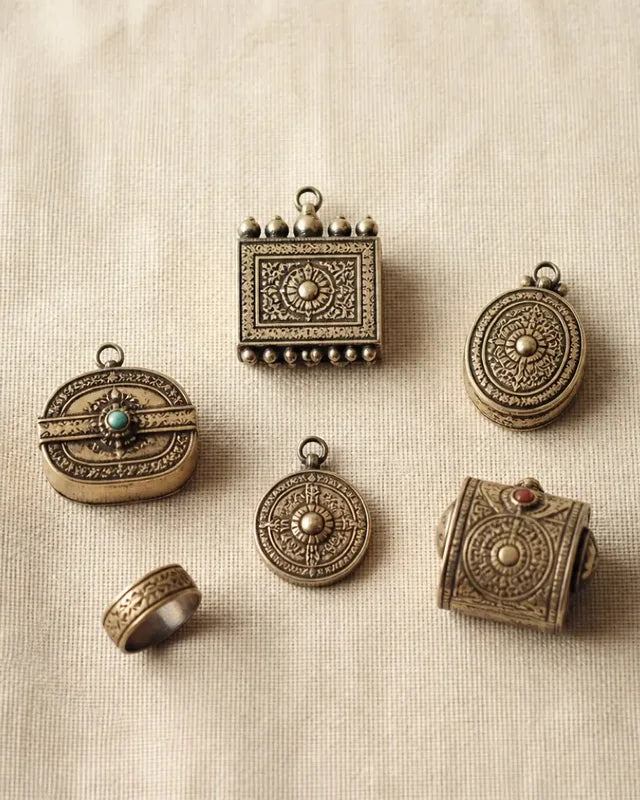
This pendant uses an uncommon openable scripture-case form: the outside is a square silver case that opens like a miniature portable shrine. A gilded Yellow Jambhala figure is set on the right, and several small gilded Buddha figures or deity reliefs are arranged on the left, forming a "main deity + many Buddhas protecting" structure that is exquisite, dignified and full of ritual feeling.
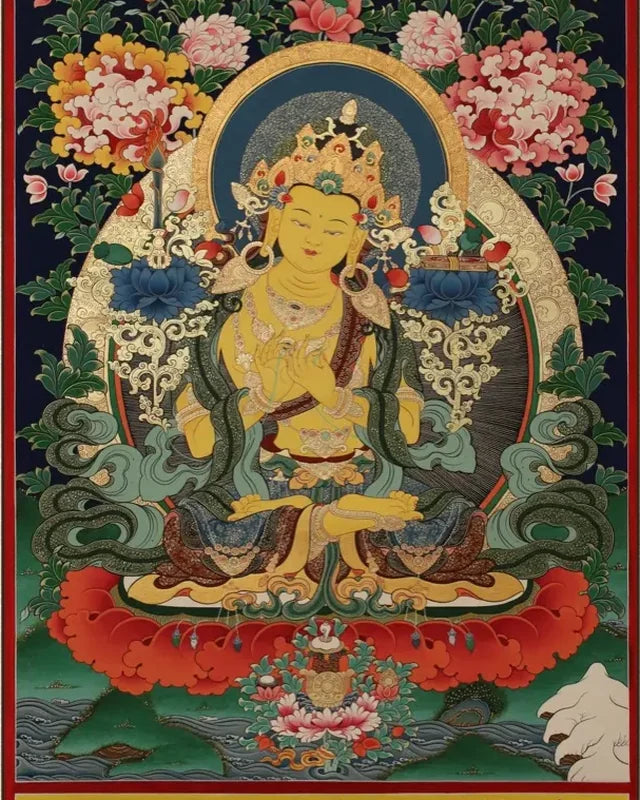
Yellow Jambhala sits on a lotus base with a full, dignified body and a majestic yet settled expression; the garments, jeweled crown and necklaces are richly layered, conveying abundance, completeness and protection. The golden figures contrast vividly with the silver case, giving the piece both the dignity of Tibetan religious art and the refined quality of jewelry.
Note: In Tibetan Buddhism Yellow Jambhala is often seen as a symbol of merit, wealth, good connections and abundant conditions. His image, practices and symbolic details may be interpreted differently across lineages; everyday copy can focus on cultural meaning and expressions of blessing.
Key Selling Points
Yellow Jambhala theme, symbolizing gathering fortune and blessings
Yellow Jambhala is often associated with growing merit, gathering resources and favorable conditions for one's work, symbolizing gradually building a stable, abundant foundation for life and business through kindness, diligence and wisdom.
Openable scripture-case design, uncommon and ceremonial
The pendant opens to reveal a complete shrine space inside, more collectible, interactive and personal than an ordinary flat pendant.
Main deity and many Buddhas in one shrine, richly layered blessings
Yellow Jambhala on one side and small figures on the other create a dignified, full space of protection, symbolizing merit, good connections and resources gathering together.
Silver case with gilding, clearly layered
The silver shell is steady and cool, the gilded figures warm and bright; the warm and cool tones set each other off, giving the figures, patterns and case structure more three-dimensional depth.
Suited to wearing close to the body and treasuring
The scripture-case pendant works as an everyday accessory and also suits collecting and display, or as a gift carrying wishes for a stable business and a prosperous life.
Cultural Story and Meaning
Yellow Jambhala, usually called Jambhala in Sanskrit, is one of the important deities in Tibetan Buddhism associated with wealth, merit and complete resources. The "wealth" he symbolizes is not only material gain; it also includes opportunity, trust, cooperation, wisdom, a healthy order of life, and a stable foundation built up from good connections.
Yellow Jambhala's image is usually abundant, complete and fully majestic. This abundance does not encourage endless possession; it is a wish for "enough": may people, as they work to build their lives and businesses, have the vision to seize opportunities, the ability to hold onto results, and the generosity to share and give back.
The opening design of this scripture-case pendant also gives "abundance" a more concrete expression. The outside is calm and restrained, but when opened it reveals the gilded main deity and other figures, like holding a dignified and prosperous wish within a tiny space. It reminds the wearer that the abundance truly worth treasuring comes from long-term accumulation and from calm, clear-headed choices.
Overall meaning:
May your merit gradually grow and good connections gather; may your business have roots and your life have plenty; in every effort and choice, may you steadily receive the abundance that is yours.
Gift Suggestions
The gifting focus of the Yellow Jambhala scripture-case pendant can be "running a business, opening blessings, gathering resources, steady growth and wishes for prosperity." It suits expressing confidence in and good wishes for someone's future, without exaggerated promises of wealth, and is better at conveying a long-term, steady idea of abundance.
Suited to these occasions:
For someone about to open a business or start a company
Such as opening a new shop, founding a company, launching a studio or starting to work independently. Yellow Jambhala symbolizes fortune and blessings gathering gradually with good connections at your side, ideal for wishing a smooth start and a slow gathering of customers and opportunities.
For someone expanding their business
Such as taking on a management role, preparing a new project, entering a new market or going through a business transformation. It symbolizes keeping a steady foundation amid change and building resources and trust through challenges.
For business partners or collaborators
With its cultural depth, craftsmanship and meaning of blessing, the scripture-case pendant suits commemorating an important partnership, festive gifting or expressing appreciation between long-term partners.
For people who value quality of life and financial planning
What Yellow Jambhala represents is not only "gaining" but also "keeping" and "using well." Ideal for people who carefully manage their family, business and the rhythm of life.
For lovers of Eastern art and collecting
The opening scripture-case structure tells more of a story than an ordinary pendant, ideal for collectors who favor Tibetan craftsmanship, Buddhist art and small sacred spaces.
This gift is for "people carefully building their future." It wishes not for overnight gains, but that they accumulate merit over time, meet opportunities through effort, and stay calm and composed when abundance arrives.
Wearing and Styling Suggestions
With a silver chain: echoes the case material for a clean, crisp look, suited to everyday commuting and minimalist styles.
With a black cord: brings out the character of a Tibetan amulet, steady and understated, and makes the gilded main deity the visual focus.
Good to wear close to the body: the scripture-case structure has a private feel, suited to long-term companionship, carrying wishes for work, life and the future.
Avoid opening, closing and pulling it frequently: if it has a hand-made hinge, open and close it gently and avoid forcing it or pulling it often, to reduce everyday wear.